In modern industrial equipment, electronic devices, vehicles, and ventilation systems, effective thermal management is essential for performance, safety, and longevity. One of the most widely used components for moving air and managing heat is the axial fan. From compact electronic enclosures to large-scale industrial ventilation, axial fans play a critical role in maintaining stable operating conditions.
Understanding the purpose of an axial fan helps engineers, designers, and buyers select the right cooling solution, avoid system inefficiencies, and reduce long-term operating costs. This article explores what axial fans are, how they work, their main purposes, advantages and limitations, common applications, and key factors to consider when choosing an axial fan for a cooling or ventilation system.
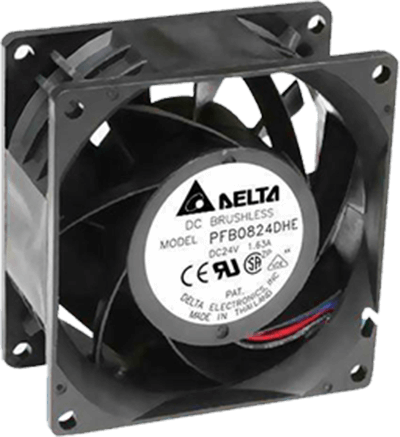
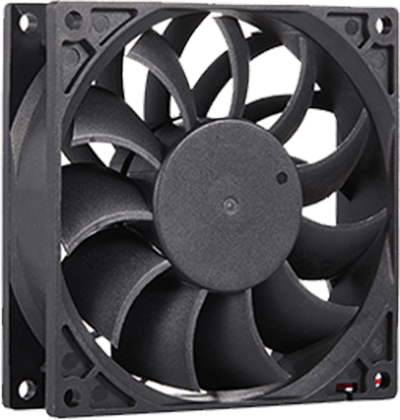
An axial fan is a type of fan that moves air parallel to the axis of rotation. In simple terms, air enters and exits the fan in the same straight-line direction, similar to how a propeller pushes air forward. This design allows axial fans to move large volumes of air efficiently with relatively low energy consumption.
Axial fans are commonly compared with centrifugal and radial fans. Unlike centrifugal fans, which redirect airflow at a 90-degree angle, axial fans focus on straight-through airflow. Their basic structure includes fan blades, a motor (AC or DC), a hub, and a frame or housing. Variations include AC axial fans, DC axial fans, EC axial fans, and specialized industrial axial fans designed for harsh environments.
The operating principle of an axial fan is straightforward. When the motor rotates, the blades generate a pressure difference between the front and rear of the fan. This pressure difference causes air to move along the axis of rotation, flowing through the fan in a linear path.
Blade angle, blade shape, and rotational speed significantly influence airflow volume and efficiency. A higher blade pitch typically increases airflow, while higher rotational speeds increase both airflow and noise. Axial fans are optimized for high airflow at low to moderate static pressure, making them ideal for open or low-resistance systems.
The primary purpose of an axial fan is to move large amounts of air efficiently. Axial fans excel at delivering high airflow rates (measured in CFM or m³/h) with minimal energy input. This makes them ideal for applications where air needs to be exchanged, circulated, or exhausted quickly.
Axial fans are widely used as cooling fans to remove heat from electronic components, motors, power supplies, and industrial equipment. By maintaining airflow over heat-generating components, axial fans help prevent overheating, performance degradation, and premature failure.
Another essential purpose of axial fans is ventilation. They support fresh air intake, hot air exhaust, and continuous air circulation in buildings, cabinets, and machinery. Proper ventilation improves air quality, reduces humidity, and maintains stable internal temperatures.
Axial fans help maintain consistent operating temperatures in systems that are sensitive to thermal fluctuations. Stable temperature control improves efficiency, reliability, and safety across a wide range of applications.
Axial fans are popular across industries due to several key advantages:
High airflow capacity: Ideal for applications requiring large air volume movement
Simple and compact design: Easy to integrate into tight spaces
Energy efficiency: Especially in DC axial fan designs
Cost-effective: Lower manufacturing and installation costs compared to centrifugal fans
Easy installation and maintenance: Minimal system complexity
Low-noise axial fan designs and brushless DC motors further enhance their suitability for modern cooling systems.
Axial fans are used in a wide variety of industries and products:
Electronics and Electrical Enclosures
Server racks and data centers
Power supplies and inverters
Control cabinets and communication equipment
HVAC and Building Ventilation
Exhaust and intake ventilation systems
Air circulation in commercial and residential buildings
Engine cooling
Battery thermal management in electric vehicles
Cabin ventilation systems
Industrial Machinery
Equipment cooling
Automation systems
Power electronics and industrial control panels
Household and Commercial Appliances
Air purifiers
Refrigeration systems
Cooling for kitchen and office equipment
Axial fans provide higher airflow but lower pressure, while centrifugal fans offer higher pressure but lower airflow. Axial fans are ideal for open systems, whereas centrifugal fans are better for ducted systems.
Radial fans handle dust-laden or high-temperature air better but are noisier and less efficient for clean-air cooling. Axial fans are more energy-efficient for general ventilation and electronics cooling.
Selecting the right axial fan requires evaluating several technical parameters:
Airflow requirement: Measured in CFM or m³/h
Static pressure: System resistance must be low for optimal performance
Fan size and mounting: Ensure compatibility with installation space
Noise level: Important for indoor or user-facing equipment
Power consumption: DC axial fans offer higher efficiency
Operating environment: Temperature, humidity, dust, and moisture exposure
Advanced features such as PWM control, speed regulation, and IP-rated protection can further enhance fan performance and reliability.
The purpose of an axial fan extends far beyond simply moving air. Axial fans are essential for cooling, ventilation, temperature control, and system reliability across countless applications. Their ability to deliver high airflow efficiently, combined with compact design and cost-effectiveness, makes them a preferred choice in electronics, industrial equipment, HVAC, automotive systems, and more.
Choosing the right axial fan requires understanding airflow needs, system resistance, noise requirements, and environmental conditions. With proper selection and application, axial fans significantly enhance performance, efficiency, and equipment lifespan.
As a professional manufacturer specializing in high-performance cooling solutions, EISKUHL is committed to delivering reliable axial fans, DC cooling fans, low-noise fan solutions, and customized thermal management products for global industrial and commercial applications.