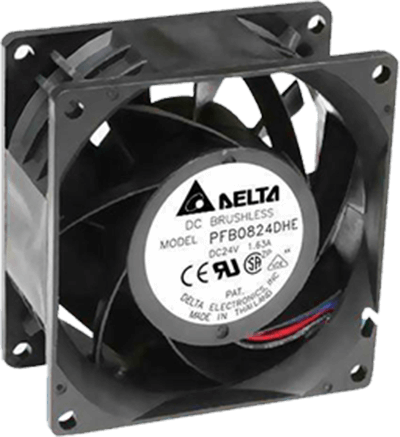
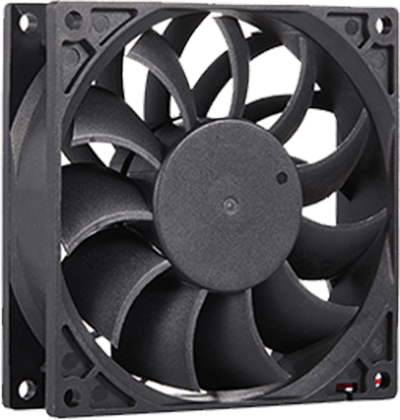
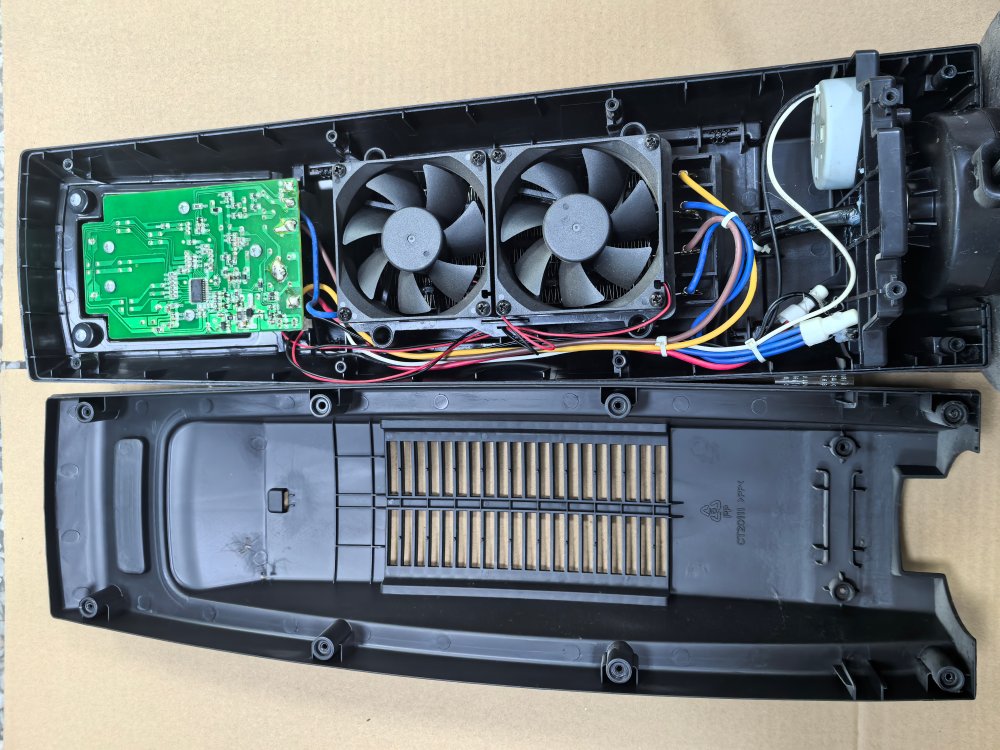
As electronic equipment becomes more compact and powerful, effective thermal management is becoming increasingly important. Servers, communication devices, industrial controllers, power supplies, and other electronic systems generate heat during operation. Without proper cooling, excessive temperatures can reduce performance, shorten component life, and even cause system failure.
Among the various cooling solutions available, DC axial fans are widely used because they offer a practical combination of airflow performance, compact size, low power consumption, controllability, and reliability.
A DC axial fan is a cooling fan powered by direct current (DC). Its blades rotate around a central axis and move air in a direction that is generally parallel to the fan shaft.
The basic working process is simple: the motor drives the impeller, the rotating blades draw air into the fan, and the air is pushed through the equipment to remove heat.
This airflow structure makes axial fans particularly suitable for electronic equipment that requires continuous air movement through an enclosure or chassis. Compared with some other cooling solutions, axial fans can provide relatively high airflow while maintaining a compact and simple structure.
Electronic equipment is becoming smaller, but the amount of heat generated by internal components is not necessarily decreasing. This creates a challenge for engineers: more heat needs to be removed from a smaller space.
DC axial fans are available in a wide range of sizes, allowing designers to select a fan that fits the available installation area. Their relatively simple structure also makes them easy to integrate into equipment housings, control cabinets, server chassis, and other compact systems.
For space-constrained electronic equipment, the ability to provide effective airflow without occupying excessive internal space is a major advantage.
The primary function of a cooling fan is to move heat away from electronic components. DC axial fans are well suited to applications where a relatively large volume of air needs to pass through an enclosure.
The fan can create a continuous airflow path that brings cooler air toward heat-generating components while carrying warm air away from the system.
However, effective cooling is not simply a matter of choosing the fan with the highest airflow rating. Actual performance depends on the resistance within the system. Heat sinks, filters, protective grilles, narrow air passages, and densely arranged components can all restrict airflow.
For this reason, both airflow and static pressure should be considered when selecting a DC axial fan.
Energy efficiency is another important consideration in electronic equipment design.
Many electronic systems already use DC power internally, making DC fans convenient to integrate into the overall power architecture. Brushless DC motors can also provide efficient operation while consuming relatively little power compared with some conventional cooling solutions.
This becomes particularly important in equipment that operates continuously. In applications such as servers, network equipment, and telecommunications systems, cooling fans may run for thousands of hours. Reducing the power consumption of each fan can contribute to lower overall energy consumption.
Electronic equipment does not always operate under the same thermal load. A device may generate significantly more heat during high-performance operation than during standby or low-load conditions.
DC axial fans can support different speed-control methods, including PWM control. This allows the cooling system to adjust fan speed according to the actual thermal requirements of the equipment.
For example, when the internal temperature increases, the control system can increase fan speed to provide additional cooling. When the temperature decreases, fan speed can be reduced.
This approach can help achieve a balance between:
As a result, controllable DC axial fans are suitable for modern electronic systems that require more precise thermal management.
Many electronic devices are expected to operate continuously. Servers, communication equipment, industrial control systems, and power electronics may need to remain operational around the clock.
In these applications, cooling fan reliability is critical. A fan failure can cause internal temperatures to rise rapidly and potentially affect sensitive electronic components.
The reliability of a DC axial fan depends on factors such as motor construction, bearing type, operating temperature, rotational speed, and overall manufacturing quality.
When selecting a fan for continuous operation, engineers should therefore evaluate the expected service life and operating conditions rather than focusing only on initial cost.
Noise is an important consideration for electronic equipment used in offices, laboratories, medical environments, homes, and other noise-sensitive locations.
Fan noise is affected by several factors, including rotational speed, blade geometry, motor design, bearing type, airflow turbulence, and system resistance.
A well-designed DC axial fan can provide the required airflow while maintaining an acceptable noise level. In addition, speed control allows the fan to operate at lower speeds when maximum cooling capacity is not required.
This makes DC axial fans suitable for applications where both thermal performance and acoustic comfort matter.
DC axial fans can be designed for different operating voltages, making them compatible with a variety of electronic systems.
Common voltage options include 5V, 12V, 24V, and 48V, although the appropriate voltage depends on the specific fan and equipment.
This flexibility allows engineers to select a fan that matches the available power supply without requiring major changes to the equipment's electrical architecture.
Additional functions such as PWM speed control, tachometer feedback, and alarm signals can also be incorporated when the application requires fan monitoring or intelligent thermal management.
The combination of compact size, airflow performance, and controllability makes DC axial fans suitable for many types of electronic equipment.
Servers generate significant amounts of heat from processors, memory, power supplies, and other components. Continuous airflow is essential for maintaining stable operating temperatures.
Cooling fans are commonly used to move air through server chassis and remove heat from internal components.
Routers, switches, communication equipment, and other telecom systems often operate continuously and may contain densely packed electronic components.
DC axial fans can provide the airflow required to prevent heat buildup while fitting into relatively compact equipment structures.
Industrial PCs, PLC systems, control cabinets, automation equipment, and other industrial electronics may operate for long periods under demanding conditions.
Proper airflow helps prevent excessive temperatures and supports stable operation of electronic components.
Power supplies, UPS systems, inverters, motor drives, and other power electronics generate heat during energy conversion and operation.
DC axial fans can direct airflow across heat sinks and other heat-generating components to improve heat dissipation.
Computers and other IT equipment are another common application. Fans can be installed to establish a controlled airflow path through the chassis, helping remove heat generated by processors, graphics components, power supplies, and other hardware.
DC axial fans are not the right choice for every application. Compared with centrifugal fans, axial fans are generally better suited to applications requiring high airflow through relatively open or low-to-moderate resistance paths, while centrifugal fans are often preferred when higher static pressure is needed.
Selecting the right DC axial fan requires more than comparing fan size or airflow ratings. Several factors should be evaluated together.
Airflow: Determine how much air is required to remove the heat generated by the equipment.
Static pressure: Consider the resistance created by filters, heat sinks, grilles, and internal airflow paths.
Fan size: Make sure the fan fits the available installation space while providing sufficient cooling performance.
Voltage: Select a fan compatible with the equipment's DC power supply.
Noise: Consider the required acoustic performance, especially for office, medical, laboratory, and consumer applications.
Bearing and lifetime: Evaluate the expected operating hours, environmental conditions, and reliability requirements.
Control functions: If the equipment requires dynamic cooling, consider features such as PWM speed control, tachometer feedback, or alarm signals.
Most importantly, fan selection should be based on the actual operating conditions of the equipment. A fan that performs well in free air may deliver very different results once installed inside a restricted enclosure.
DC axial fans are widely used in electronic equipment cooling because they provide a practical balance of airflow, compact design, energy efficiency, speed control, reliability, and installation flexibility.
They can be applied across a wide range of systems, from servers and telecommunications equipment to industrial controllers, power electronics, and IT hardware. However, achieving effective cooling requires more than selecting a high-airflow fan. Airflow resistance, heat load, available space, noise requirements, operating voltage, and expected service life should all be considered during the selection process.
With experience in thermal management and cooling fan manufacturing, EISKUHL provides DC axial fans and other cooling solutions designed for electronic, industrial, and related applications. By offering different fan configurations and customization capabilities, EISKUHL supports equipment manufacturers in developing reliable and efficient cooling systems.