Cooling fans are essential components in modern equipment, from industrial machinery and HVAC systems to electronics, automotive modules, and telecommunications infrastructure. As thermal loads continue to increase and systems become more compact, choosing the right cooling solution is critical for performance, efficiency, and reliability.
Among the most widely used cooling devices are axial fans, which move air parallel to the axis of rotation. However, one of the most common questions engineers and buyers face is: Should you choose an AC axial fan or a DC axial fan?
Understanding the differences between AC cooling fans and DC axial fans is essential for selecting the right solution for your application. This article provides a detailed comparison of both types, including performance, efficiency, noise, and practical selection guidance.

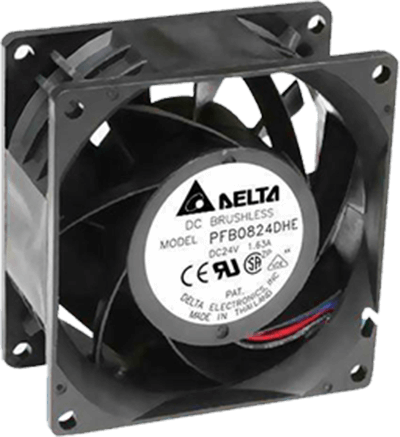
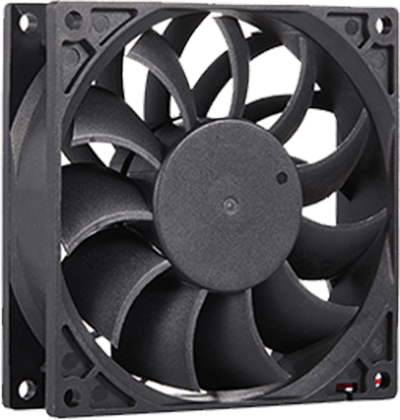
An axial fan is a type of fan that moves air in a straight line, parallel to the fan shaft. It typically consists of:
Fan blades (impeller)
Motor (AC or DC)
Hub and frame
Axial fans are widely used because they provide high airflow (CFM) with relatively simple construction and cost-effective operation. Common applications include:
Electronics cooling
Industrial ventilation
HVAC systems
Automotive cooling systems
An AC axial fan is powered directly by alternating current (AC), typically from the electrical grid.
Key Features:
Operates on standard voltages such as 110V, 220V, or 380V
Simple motor structure
Direct connection to mains power
Common in large-scale industrial and ventilation systems
AC axial fans are often used where power supply is readily available and precise control is not a priority.

A DC axial fan uses direct current (DC) power and typically incorporates a brushless DC motor (BLDC).
Key Features:
Operates on low voltages such as 5V, 12V, 24V, or 48V
High efficiency and low power consumption
Supports advanced control (PWM, speed regulation)
Compact and lightweight design
DC axial cooling fans are widely used in electronics, telecom equipment, and dc automotive axial fans applications due to their efficiency and flexibility.
Overview Comparison Table
|
Feature |
AC Axial Fan |
DC Axial Fan |
|
Power Supply |
AC (110V–380V) |
DC (5V–48V) |
|
Motor Type |
Induction motor |
Brushless DC motor |
|
Energy Efficiency |
Moderate |
High |
|
Speed Control |
Limited |
Precise (PWM supported) |
|
Noise Level |
Higher |
Lower |
|
Size |
Larger |
Compact |
|
Lifespan |
Moderate |
Longer |
|
Cost (Initial) |
Lower |
Higher |
|
Control Features |
Basic |
Advanced (monitoring, feedback) |
Airflow and Static Pressure
Both AC and DC axial fans can deliver high airflow, but performance varies depending on design and application.
|
Performance Factor |
AC Axial Fan |
DC Axial Fan |
|
Airflow (CFM) |
High |
High |
|
Static Pressure |
Moderate |
Moderate to high (optimized designs) |
|
Efficiency |
Lower |
Higher |
|
Power Consumption |
Higher |
Lower |
DC fans often achieve similar airflow with lower power consumption due to more efficient motor design.
AC axial fans remain widely used due to several practical benefits:
Simple structure and easy installation
Lower upfront cost
Direct connection to mains power (no conversion needed)
Suitable for large-scale ventilation systems
Reliable for heavy-duty industrial environments
Typical applications include:
Industrial exhaust systems
HVAC ventilation
Large machinery cooling
Modern systems increasingly favor DC fans due to their advanced capabilities:
High energy efficiency, reducing operating costs
Low noise operation, ideal for sensitive environments
Compact design, suitable for space-constrained devices
Advanced control features, including PWM and speed regulation
Longer lifespan, especially with ball or FDB bearings
These advantages make dc axial compact fans and dc brushless axial flow fans ideal for modern electronics and smart systems.
Both AC and DC axial fans have their place in thermal management systems. AC fans offer simplicity and lower initial cost, making them suitable for large-scale industrial applications. However, DC axial fans provide superior efficiency, quieter operation, compact design, and advanced control features—making them the ideal choice for modern electronics, automotive systems, and high-performance equipment.
When choosing between the two, it is essential to evaluate your specific application requirements, including power availability, efficiency goals, noise limits, and system design constraints.
For businesses seeking reliable and high-performance cooling solutions, working with a professional dc axial fan manufacturer ensures optimal product selection and long-term system performance.
EISKUHL is a professional provider of advanced cooling solutions, specializing in DC axial fans, DC axial compact fans, DC automotive axial fans, and high-efficiency DC brushless axial flow fans. With strong expertise in OEM and customized cooling design, EISKUHL delivers reliable, energy-efficient, and low-noise fan solutions for electronics, industrial equipment, automotive systems, and next-generation thermal management applications.