In today’s global electronics market, compliance with international regulations is no longer optional—it is a fundamental requirement for market access, product safety, and brand credibility. For manufacturers and buyers of frameless cooling fans, certifications such as CE and RoHS play a critical role in ensuring that products meet regulatory standards in Europe and beyond.
As frameless DC fans are increasingly used in high-performance applications like PCB cooling, EV systems, telecom equipment, and industrial electronics, the importance of compliance becomes even more significant. These fans are often embedded directly into systems, meaning any failure in safety or material compliance can have serious consequences.
This article provides a comprehensive guide to understanding CE and RoHS certifications, their relevance to frameless blower fans and axial designs, and how to ensure your products meet global compliance requirements.

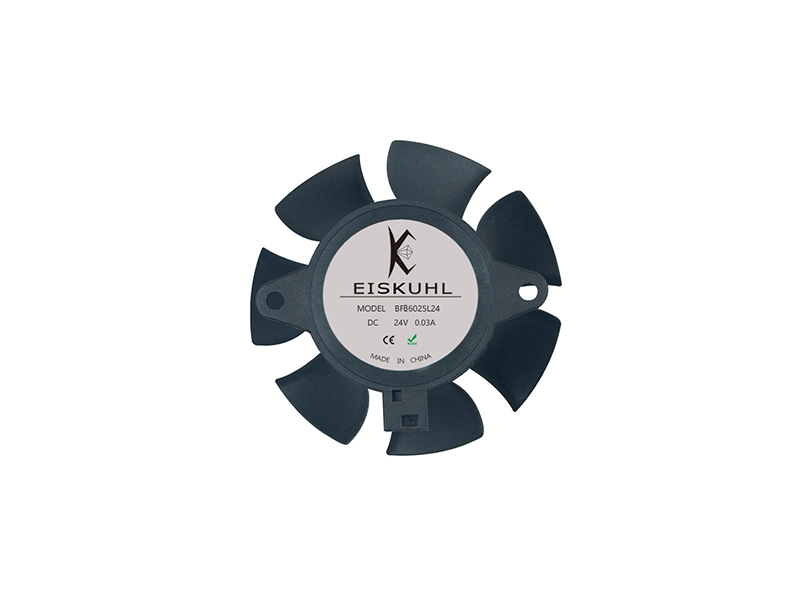
A frameless fan is a type of cooling solution that eliminates the traditional outer housing found in standard fans. Instead, it consists of:
A brushless DC motor (stator and rotor)
Integrated fan blades
Driver PCB for control and operation
This compact design allows the fan to be directly integrated into system structures such as heatsinks, enclosures, or airflow ducts.
PCB-level cooling in electronics
EV battery management systems
Telecom infrastructure (e.g., 5G equipment)
Industrial automation systems
Medical and precision devices
Because frameless cooling fans are often embedded into critical systems, compliance with safety and environmental regulations is essential.
CE certification is a conformity marking required for products sold within the European Economic Area (EEA). It indicates that a product complies with applicable European Union directives related to safety, health, and environmental protection.
For frameless DC fans, CE marking is not just a label—it is a legal requirement for entering the European market.
Several EU directives apply to cooling fans:
Low Voltage Directive (LVD): Ensures electrical safety
Electromagnetic Compatibility (EMC) Directive: Ensures the product does not interfere with other electronic devices
Machinery Directive (in some cases): Applies if the fan is part of a larger mechanical system
Electrical safety (insulation, overheating protection)
Electromagnetic interference (EMI) and compatibility (EMC)
Mechanical safety and operational reliability
To obtain CE certification, manufacturers must:
Conduct a risk assessment
Perform product testing (internally or via certified labs)
Prepare a technical file documenting compliance
Issue a Declaration of Conformity (DoC)
Affix the CE marking to the product
For frameless fan manufacturers, this process ensures that their products meet strict European standards.
RoHS (Restriction of Hazardous Substances) is an EU directive that limits the use of specific hazardous materials in electrical and electronic equipment. Its primary goal is to protect human health and the environment.
RoHS restricts the following substances:
Lead (Pb)
Mercury (Hg)
Cadmium (Cd)
Hexavalent chromium (Cr6+)
Polybrominated biphenyls (PBB)
Polybrominated diphenyl ethers (PBDE)
DEHP, BBP, DBP, DIBP (phthalates)
For frameless DC fans, RoHS compliance involves:
PCB boards and electronic components
Soldering materials
Plastic housings and insulation
Wiring and connectors
Manufacturers typically ensure compliance through:
Supplier material declarations
Laboratory testing (e.g., XRF analysis)
Documentation and traceability systems
RoHS is especially important for frameless cooling fans used in consumer electronics and environmentally regulated markets.
|
Aspect |
CE Certification |
RoHS Certification |
|
Type |
Conformity mark |
Environmental directive |
|
Focus |
Safety & performance |
Hazardous substance control |
|
Region |
European Economic Area |
EU (globally adopted) |
|
Requirement |
Mandatory for market entry |
Mandatory for electronics |
|
Scope |
Electrical, mechanical, EMC |
Materials and substances |
In short, CE ensures that the product is safe to use, while RoHS ensures that it is safe for the environment.

Without CE and RoHS compliance, frameless DC fan manufacturers cannot legally sell products in the European market. Many other regions also recognize or require similar standards.
Compliance ensures that frameless blower fans and axial designs operate safely within electronic systems, reducing risks such as overheating, electrical faults, or interference.
RoHS compliance demonstrates a commitment to sustainability by reducing harmful substances in electronic products.
OEM buyers and global clients prefer certified products. Providing CE and RoHS documentation enhances credibility and simplifies procurement decisions.
Because frameless cooling fans are integrated into systems, testing and certification can be more complex than for standalone products.
The presence of driver PCBs in frameless DC fans requires strict compliance with both electrical safety and material regulations.
Brushless motors and control circuits can generate electromagnetic interference, making EMC compliance a key challenge.
Ensuring that all materials and components meet RoHS requirements requires close coordination with suppliers.
Always request:
Declaration of Conformity (DoC)
CE test reports
RoHS compliance reports
A reliable frameless dc fan manufacturer should have:
Experience with international certifications
In-house or partner testing capabilities
Strong quality management systems
Ask for:
RoHS material declarations
Third-party lab test results
Assuming CE automatically includes RoHS (it does not)
Accepting incomplete or outdated certificates
Failing to verify test reports
Ignoring compliance of internal components
These mistakes can lead to regulatory issues, shipment delays, or product recalls.
The regulatory landscape is evolving rapidly:
Stricter environmental regulations worldwide
Expansion of RoHS-like standards in other regions
Increased focus on sustainability and recyclability
Integration with additional certifications such as REACH and UL
For frameless blower fans and other cooling solutions, staying ahead of these trends is essential for global competitiveness.
CE and RoHS certifications are essential for ensuring that frameless DC fans meet safety, performance, and environmental standards in the global market. While CE focuses on product safety and compliance with EU directives, RoHS addresses the restriction of hazardous substances, making both certifications equally important.
For engineers, OEM buyers, and distributors, understanding these certifications helps reduce risk, improve product quality, and ensure smooth market entry. As frameless fan technology continues to evolve, compliance will remain a key factor in product selection and supplier evaluation.