Thermal management is a critical design consideration in modern medical devices. From patient monitors and imaging systems to ventilators and portable diagnostic equipment, electronic components generate heat that must be dissipated effectively to ensure performance stability, regulatory compliance, and patient safety. Selecting the right cooling solution is therefore not simply a matter of airflow—it is a system-level engineering decision.
Among active cooling solutions, axial fans, blower (centrifugal) fans, and frameless fans are the most widely used in medical devices. Each technology offers distinct advantages and trade-offs in airflow, pressure, size, noise, reliability, and integration complexity. This article provides a detailed comparison to help engineers, OEMs, and procurement teams determine which cooling solution best fits their medical device application.
Medical devices operate under stricter requirements than consumer or industrial electronics. Overheating can lead to component drift, inaccurate measurements, shortened lifespan, or even device shutdown. In clinical environments, thermal failure may compromise patient safety and interrupt critical care.
Key reasons cooling selection matters include:
Compliance with IEC 60601 safety and temperature limits
Continuous or long-duty-cycle operation
Low noise requirements in patient-facing environments
Compact and sealed enclosures
High reliability and predictable lifespan
Because of these constraints, fan selection must be matched precisely to the thermal load and airflow path of the device.
Medical devices must comply with international standards governing temperature rise, electrical safety, and mechanical reliability. Cooling fans must support stable internal temperatures without introducing excessive noise or vibration. Certification requirements often favor brushless DC fans due to their efficiency, controllability, and long service life.
Medical device designers face several physical and operational constraints:
Limited internal space
High heat density from processors, power modules, and sensors
Enclosed or partially sealed housings
Continuous operation in 24/7 clinical settings
Battery-powered or energy-efficient designs
These constraints influence whether a dc axial compact fan, dc blower fan, or frameless cooling fan is the optimal choice.
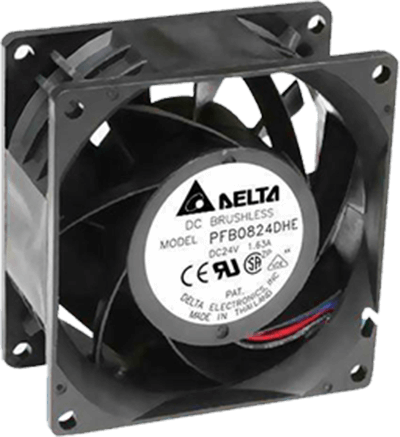
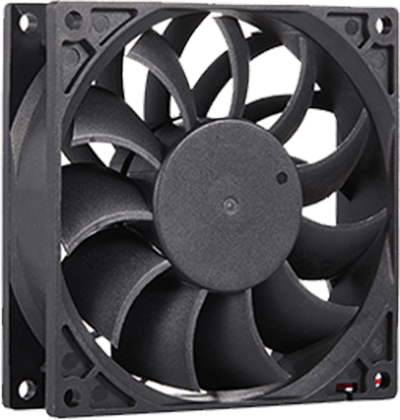
An axial fan moves air parallel to the axis of rotation. Air enters from one side of the fan and exits in a straight line. Most axial DC fans are compact, lightweight, and easy to integrate, making them one of the most common cooling solutions in electronics.
Axial fans are valued for their simplicity and efficiency:
High airflow volume at low static pressure
Low power consumption
Compact form factors such as dc axial compact fan designs
Cost-effective for mass production
Wide availability from dc axial fan manufacturers
For applications with minimal airflow resistance, axial DC fans provide efficient heat removal.
Despite their advantages, axial fans have limitations:
Poor performance in ducted or restricted airflow paths
Reduced efficiency under high system resistance
Limited directional airflow control
As a result, axial fans are less suitable for tightly enclosed medical devices with complex internal layouts.
Axial fans are commonly used in:
Patient monitoring systems
Medical-grade power supplies
Open-frame diagnostic electronics
Ventilated control enclosures
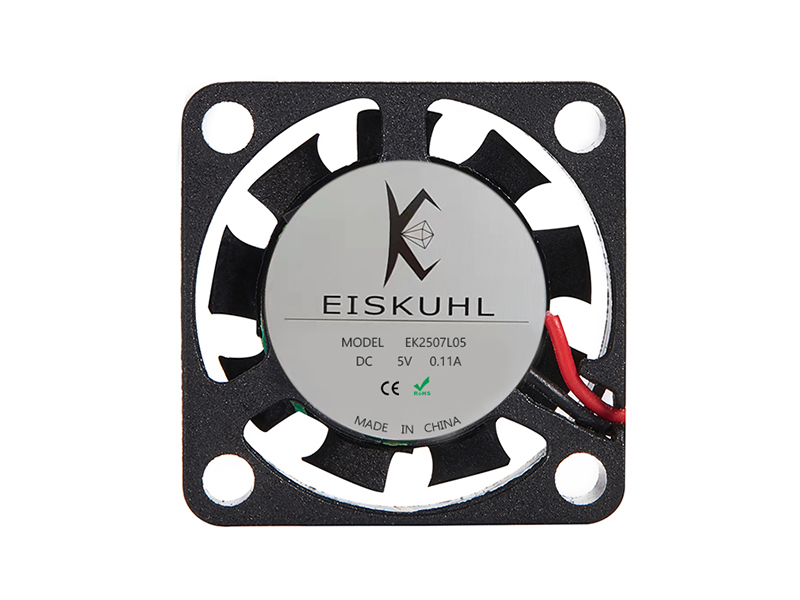
Blower fans, also known as centrifugal fans, move air perpendicular to the fan’s intake. Air is drawn into the center of the fan and expelled at a 90-degree angle. Common types include dc blower fan, brushless dc blower fan, and dc centrifugal fan designs.
Blower fans excel in applications requiring pressure rather than volume:
High static pressure capability
Effective airflow through ducts, filters, and heat sinks
Controlled and directional airflow
Better performance in compact, enclosed systems
In medical devices with dense internal layouts, dc centrifugal fan solutions often outperform axial fans.
Blower fans also present trade-offs:
Larger footprint compared to axial fans
Higher noise levels if not properly dampened
Increased power consumption
More complex airflow design requirements
However, advances in brushless dc blower fan technology have significantly improved efficiency and acoustic performance.
Blower fans are widely used in:
Ventilators and respiratory therapy devices
Laboratory analyzers
Medical imaging and laser systems
Equipment with HEPA filters or airflow channels
Some designs draw from automotive dc centrifugal fans, adapted for medical-grade reliability.
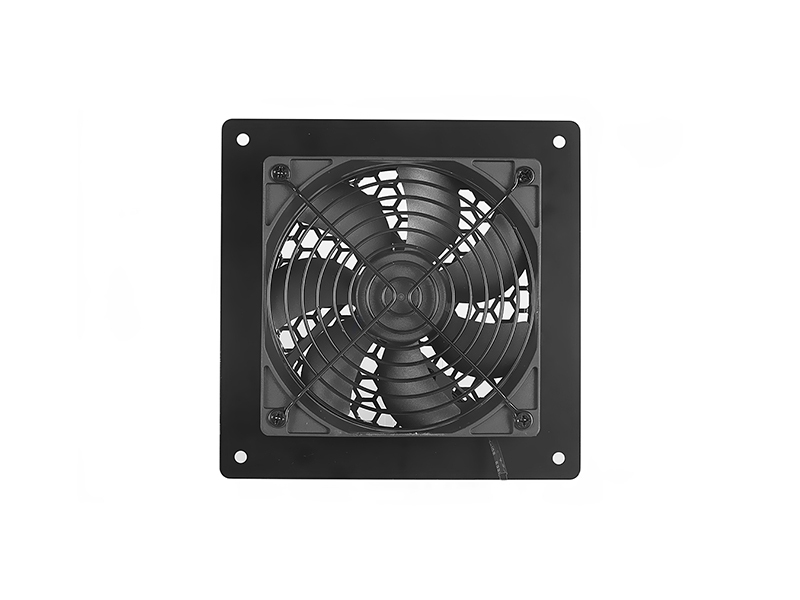
A frameless fan removes the traditional square or round housing found in standard fans. Instead, the motor and impeller are integrated directly into the device structure. Common variants include frameless cooling fan, frameless exhaust fan, and frameless blower fans.
Frameless fans offer unique benefits for compact designs:
Ultra-thin and lightweight
Maximum flexibility in industrial design
Reduced system height and footprint
Optimized airflow when integrated into custom housings
These advantages make frameless cooling fans especially attractive for space-constrained medical devices.
The benefits of frameless fans come with challenges:
Higher integration complexity
Greater dependence on enclosure design
More demanding airflow simulations
Typically higher unit cost
Improper mounting or airflow design can significantly reduce performance.
Frameless fans are often used in:
Portable diagnostic equipment
Wearable or handheld medical devices
Compact imaging instruments
Embedded electronics requiring frameless pc fans
Axial DC fans: High airflow, low pressure
DC blower fans: Moderate airflow, high pressure
Frameless fans: Performance depends on enclosure integration
Blower fans are superior in ducted systems, while axial fans perform best in open airflow paths.
Noise is a critical factor in patient environments:
Axial fans generally offer lower noise at low pressure
Blower fans require careful acoustic optimization
Frameless fans can achieve low noise if properly integrated
Axial fans are compact and standardized
Blower fans are bulkier but more powerful
Frameless fans provide the greatest design freedom
Battery-powered devices often favor axial or frameless solutions due to lower power draw, while stationary systems can accommodate higher-power blower fans.
Low airflow resistance
Cost-sensitive designs
General electronics cooling
Applications suited for axial dc fans
High static pressure requirements
Ducted or filtered airflow
Critical thermal control
Use of brushless dc blower fan or dc centrifugal fan designs
Extreme space constraints
Custom enclosure designs
Portable or wearable devices
Integration of frameless cooling fans or frameless blower fans
There is no universally “best” cooling fan for medical devices. The optimal solution depends on airflow resistance, enclosure design, noise limits, power availability, and regulatory requirements. Axial fans provide efficient, low-cost airflow for open systems. Blower fans deliver pressure and control for enclosed designs. Frameless fans unlock new possibilities for compact, design-driven medical devices.
Selecting the right cooling solution early in the design process reduces risk, improves reliability, and accelerates regulatory approval.
EISKUHL is a professional company dedicated to the research and development of cooling fans, as well as sales and related technical support and services. We produce a wide range of CE- and RoHS-certified cooling solutions, including DC, AC, and EC axial fans, blower fans, centrifugal fans, and customized fan solutions. With extensive experience in dc axial compact fan, dc blower fan, frameless cooling fan, and advanced thermal management technologies, EISKUHL supports medical device manufacturers with reliable, high-performance cooling solutions for demanding applications.