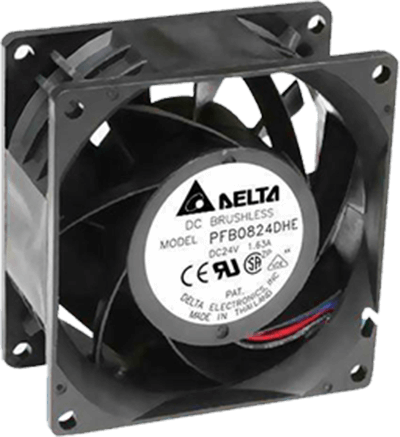
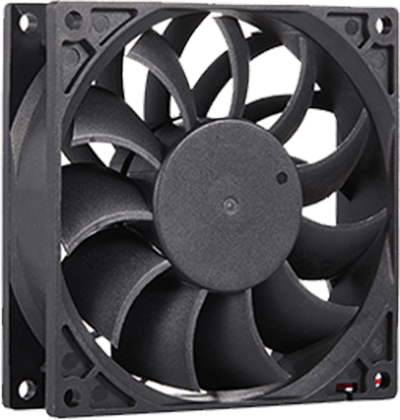
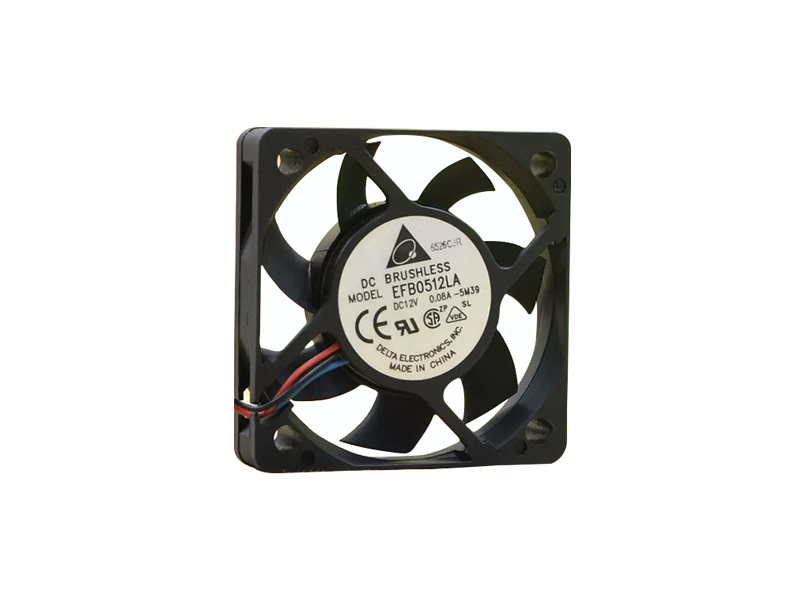
Cooling fans play a critical role in modern electronic, industrial, and computing systems. From servers and telecom equipment to medical devices and industrial controllers, effective thermal management directly impacts system stability, lifespan, and overall performance. When selecting a cooling fan, engineers and procurement teams often compare Delta fans—widely regarded as high-performance, enterprise-grade products—with so-called traditional fans, which typically refer to standard, general-purpose cooling fans available from a broad range of manufacturers.
This article provides an in-depth comparison of Delta fan vs traditional fans, examining differences in technology, performance, reliability, cost, and application suitability to help decision-makers choose the right solution for their specific needs.
Electronic components are increasingly compact and power-dense, generating significant heat in confined spaces. Inadequate cooling can lead to:
Reduced performance due to thermal throttling
Component degradation and early failure
System instability or shutdown
Increased maintenance and downtime costs
Selecting the right cooling fan is therefore not just a mechanical choice but a strategic design decision that affects product quality and total cost of ownership.
Delta Electronics is a globally recognized manufacturer specializing in power management and thermal solutions. Its fan products are widely used in data centers, servers, telecom infrastructure, automotive systems, and industrial automation. The term Delta fan typically refers to cooling fans produced by Delta Electronics, including axial fans, blowers, and high-speed server fans.
Products such as delta electronics fan and delta electronics fans are known for their precision engineering, high reliability, and strong performance under demanding conditions.
Delta fans are positioned as premium cooling solutions with several defining traits:
Advanced brushless DC motor technology
High airflow and static pressure capability
Long service life and high MTBF ratings
Tight manufacturing tolerances and quality control
Support for PWM, tachometer, and speed control
Common examples include delta axial fans, delta brushless fan models, and specialized products such as delta computer fans and delta cooling fan solutions for servers and networking equipment.
Traditional fans generally refer to standard axial or centrifugal fans produced for broad, cost-sensitive markets. These fans are commonly used in consumer electronics, basic industrial equipment, and low-duty-cycle applications.
Unlike Delta fans, traditional fans vary widely in quality, performance, and reliability depending on the manufacturer, materials, and design priorities.
Typical features of traditional fans include:
Basic brushless or brushed motor designs
Limited airflow and pressure optimization
Fewer control or monitoring features
Shorter rated lifespan
Emphasis on low upfront cost
While traditional fans can meet basic cooling requirements, they are often not designed for continuous or mission-critical operation.
One of the most significant differences between Delta fans and traditional fans lies in motor and bearing design.
Delta fans commonly use high-efficiency brushless DC motors paired with dual ball bearings or advanced bearing systems. This configuration supports high-speed operation, continuous duty cycles, and elevated ambient temperatures.
Traditional fans often rely on sleeve bearings or lower-grade ball bearings, which can wear out more quickly, especially in high-temperature or vertical mounting orientations.
Delta fans invest heavily in aerodynamic optimization. Blade geometry, hub design, and airflow channels are engineered to maximize airflow and static pressure while minimizing turbulence and noise.
In contrast, traditional fans often use generic blade designs with limited aerodynamic optimization, resulting in lower efficiency and less predictable performance.
Most Delta fans support advanced control features such as:
PWM speed control
Tachometer feedback
Alarm outputs
These features are essential in systems that require dynamic thermal management, such as servers or industrial controllers. Traditional fans may lack these capabilities or offer them inconsistently.
Delta fans are well known for their ability to deliver high airflow and high static pressure simultaneously. This makes them particularly suitable for dense systems with heat sinks, filters, or restrictive airflow paths.
For example, delta case fans and delta computer fans used in servers can maintain airflow even under high resistance, where many traditional fans would experience a sharp performance drop.
Traditional fans generally perform adequately in open-air or low-resistance environments but struggle in tightly packed systems.
High-performance Delta fans often operate at higher speeds, which can increase noise levels. However, Delta mitigates this through precision balancing, optimized blade design, and motor control algorithms.
Traditional fans may appear quieter at low speeds but can produce irregular noise, vibration, or bearing noise over time due to lower manufacturing consistency.
Delta fans are engineered for efficiency under load. While they may consume more power at peak performance, they deliver superior cooling per watt in demanding environments.
Traditional fans typically consume less power but also provide significantly lower cooling capability, which can lead to thermal inefficiencies at the system level.
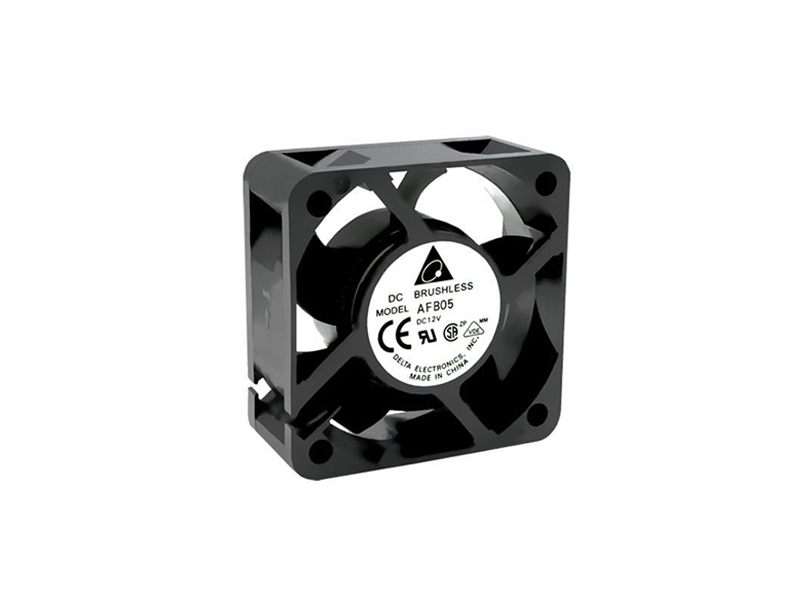
Reliability is a defining advantage of Delta fans. High MTBF ratings, often exceeding 70,000 hours, make them suitable for 24/7 operation in critical systems.
Delta fans are designed to operate reliably at higher ambient temperatures and under continuous electrical and mechanical stress. This is why they are commonly used in servers, telecom equipment, and delta automotive fans for vehicle electronics.
Traditional fans usually have shorter lifespans and higher failure rate variability, especially in high-temperature or continuous-operation environments.
Delta fans are manufactured using high-grade plastics, reinforced housings, and precision-molded components. Each unit undergoes strict quality control and performance testing.
Traditional fans often use lighter materials and less rigid housings, which may be sufficient for basic applications but can lead to deformation, vibration, or premature failure in demanding conditions.
Delta fans are best suited for applications where performance and reliability are critical:
Data centers and servers
Telecom and networking equipment
Industrial automation and control cabinets
Medical imaging and diagnostic equipment
Automotive electronics and EV systems
In these environments, delta cooling fan solutions provide consistent performance and long-term stability.
Traditional fans may be adequate for:
Consumer electronics
Low-power desktop systems
Short-duty-cycle equipment
Cost-sensitive products with minimal thermal load
In such cases, the lower upfront cost may outweigh long-term reliability considerations.
Delta fans typically carry a higher unit price compared to traditional fans. This reflects their advanced design, higher-quality materials, and rigorous testing.
Traditional fans offer lower upfront cost, making them attractive for budget-driven projects.
When considering maintenance, replacement frequency, and downtime, Delta fans often provide lower total cost of ownership. Fewer failures and longer lifespan reduce service interruptions and labor costs.
Traditional fans may require more frequent replacement, increasing long-term expenses.
The comparison of Delta fan vs traditional fans ultimately comes down to performance requirements, operating conditions, and long-term cost considerations. Delta fans offer superior airflow, pressure, reliability, and control, making them the preferred choice for mission-critical systems. Traditional fans remain viable for low-demand, cost-sensitive applications.
Understanding these differences allows engineers and buyers to make informed decisions that balance performance, reliability, and budget.
EISKUHL is a professional company dedicated to the research and development of cooling fans, as well as sales, technical support, and service. We offer a wide range of CE- and RoHS-certified cooling solutions, including DC, AC, and EC axial fans, blower fans, centrifugal fans, and customized fan solutions. With extensive experience in high-performance thermal management, EISKUHL provides reliable alternatives and complementary solutions to products such as delta electronics fans, supporting global customers across industrial, automotive, medical, and electronics markets.